
Beyond Storage: How a Master Walk-In Closet Upgrade Transforms Your Daily Routine and Your Home
Your master closet is one of the first rooms you visit each morning and one of the last spaces you see at night. Yet for many homeowners, it quietly works against them: rods sag under too many hangers, shelves overflow with mismatched bins, and somewhere in a forgotten corner sits a sweater you have not worn in two years. If any of that sounds familiar, your closet is telling you something important. It is ready for an upgrade.
A thoughtfully designed walk-in is far more than a place to hang clothes. It sets the tone for your day, calms the visual clutter of your master suite, and adds real, measurable value to your home. In this guide, we walk through everything you need to know about a master walk-in closet upgrade, from the first wish list to the moment you slide open a beautifully finished drawer for the very first time.
Why Now Is the Right Time to Upgrade Your Master Walk-In Closet
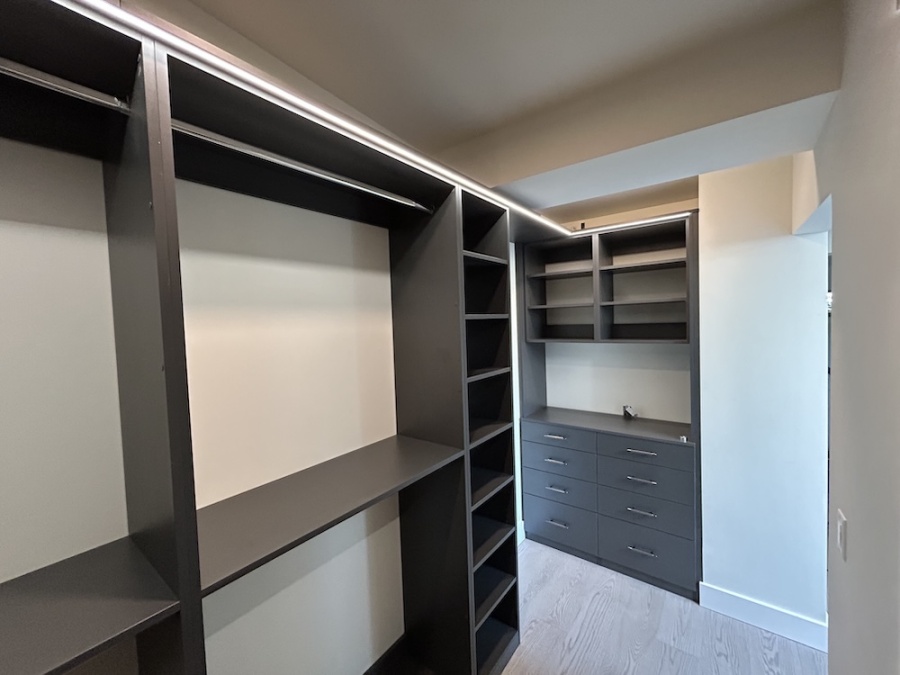
The signs your closet has outgrown your lifestyle
Most homeowners can sense when their closet has stopped keeping up. Hangers crowd each other so tightly that fabric gets crushed. Folded sweaters teeter in unsteady stacks. Shoes pile up in the bottom of the space, and accessories live in whatever bin had room that week. Over time, this disorganization quietly steals minutes from your morning and adds friction to a part of your day that should feel calm and effortless.
The everyday quality of life payoff
A custom walk-in closet design changes how your day begins. When every garment, accessory, and pair of shoes has a clear and considered home, you spend less time searching and more time getting ready. Decision fatigue eases because you can actually see what you own. The master suite feels more like the private retreat you always wanted, not a room you tolerate while you hunt for a missing belt.
Resale and appraisal impact in the Pacific Northwest
Buyers across Seattle, Bellevue, Tacoma, and the surrounding region actively shop for finished storage. In a housing market where inventory is competitive and discerning buyers expect craftsmanship, a custom walk-in closet signals quality throughout the rest of the home. Real estate agents routinely point to organized, professionally built closets as a feature that helps listings stand out, supports stronger appraisals, and shortens days on market.
Why upgrading now beats waiting
Material lead times, hardware availability, and finish trends all shift from year to year. Today's palette of warm whites, walnuts, and refined metals has remarkable staying power, which means a closet you build now will look current for many years to come. Waiting often means paying more later for the same level of quality, and living with a closet that frustrates you in the meantime.
Planning Your Upgrade: From Wish List to Working Blueprint
Start with a personal wardrobe audit
Before any design work begins, take stock of what you actually own. Count your hanging garments and separate them into long-hang items like dresses and coats, and double-hang items like shirts and folded trousers. Tally your folded pieces, your shoes (do not forget boots and seasonal styles), and your accessories. This inventory becomes the foundation of an accurately sized system. A closet built for a guess will never feel quite right. A closet built for your real wardrobe will feel custom-made, because it is.
Measure the footprint and note the obstacles
Next, measure your space carefully. Note the location of windows, HVAC vents, light switches, and door swings. Pay close attention to sloped ceilings, soffits, and any architectural quirks. Far from being deal-breakers, these features can become design opportunities in skilled hands. A professional designer knows how to turn an awkward angle into a beautifully integrated shoe wall or a tucked-away valet station.
Set a realistic budget tier
Master walk-in closet upgrades generally fall into a few investment tiers. A refresh-level project, which might include new finishes and improved organization within the existing footprint, typically starts in the lower thousands. A semi-custom system with quality materials and thoughtful zoning lands in the mid range. A fully custom luxury build with premium woods, specialty hardware, and integrated lighting can move into a higher tier that reflects the craftsmanship and longevity of the work. Knowing where you want to land helps your designer prioritize the features that matter most to you.
Choose the right path for your home
Big-box kits and online configurators promise convenience, but they often disappoint where it matters most. They rarely use your full vertical space, the materials are typically lower grade, and they do not adapt to architectural quirks. A semi-custom system improves on that, while a fully custom design is built specifically for your home, your wardrobe, and your taste. For a master suite that you plan to enjoy for decades, custom is almost always the better long-term value.
Build a realistic timeline
A typical project moves through a design consultation, finalized renderings, fabrication, and installation. Depending on complexity and current shop schedules, the full timeline often runs from a few weeks to a couple of months. Starting the conversation early gives you time to refine the design without rushing.
Layout and Design Strategies That Maximize Every Square Foot
The four main walk-in layouts
Most walk-in closets follow one of four arrangements. A U-shaped layout wraps storage around three walls and offers the most capacity for medium and large rooms. An L-shaped layout uses two walls and works well in spaces with a window or door interrupting the third side. A single-wall galley concentrates storage on one side, leaving the opposite wall open for a dressing area. A double-wall galley places storage on both long walls, ideal for narrower rooms. Each layout has its strengths, and the right one depends on your dimensions and how you plan to use the space.
Smart zoning for couples
Sharing a closet works beautifully when each person has clearly defined zones. A his-and-hers approach gives both partners dedicated hanging, drawer, and shoe areas, while shared utility zones can house items like luggage, off-season clothing, and household linens. Seasonal rotation areas, often placed higher up or in less-accessed sections, keep your daily zone uncluttered and easy to navigate.
The case for a center island
If your footprint allows it, a center island elevates a walk-in closet from functional to extraordinary. Islands provide a folding surface, valuable drawer storage for jewelry and watches, and a finishing station where you can lay out tomorrow's outfit. Topped with stone or a richly grained wood, an island becomes the visual centerpiece of the room.
Layered lighting that flatters
Lighting can make or break a closet. The best designs layer multiple sources: recessed ambient fixtures for general illumination, LED rod lighting that washes hanging garments in clear, true-to-color light, toe-kick accents for a soft glow at floor level, and a statement fixture such as a small chandelier or pendant for a finishing touch. Combined, these layers produce light that flatters fabrics and skin tones alike, so what you see in the closet is what you get when you walk out the door.
Mirrors, seating, and flow
A full-length mirror is essential, and a three-way or rotating mirror is a luxurious touch. A small bench or upholstered ottoman gives you a place to sit while putting on shoes. Above all, plan for traffic flow: drawers should be able to open fully, doors should swing without collision, and there should be enough room to step back and see your full outfit. These quiet details are what make a custom space feel like a private boutique.
Premium Features That Define a Truly Luxurious Walk-In Closet
When clients ask for luxury master closet ideas, the answer almost always lives in the details. Beautiful finishes matter, but so does the way you experience the space every single day.
Custom drawer interiors
Felt-lined jewelry trays keep necklaces from tangling and rings safely separated. Watch rolls protect timepieces and turn a drawer into a quiet display. Adjustable dividers let you reconfigure space as your collection evolves. These small touches transform a generic drawer into a tailored experience.
Specialty hardware
Pull-out valet rods give you a place to hang tomorrow's outfit. Tilt-out hampers keep laundry hidden until wash day. Motorized rotating shoe racks bring the back row to the front with a touch. Pull-down wardrobe lifts make high storage genuinely usable rather than a place where things go to be forgotten. These features are not gimmicks. They solve real, daily friction points.
Quiet, refined mechanics
Soft-close drawers and doors are the kind of detail you stop noticing because everything just feels right. Full-extension glides give you access to the very back of every drawer, so nothing gets buried. Integrated cable management keeps charging stations and grooming tools tidy and out of sight.
Display features
Glass-front cabinetry shows off folded knits and curated accessories. Open display shelving with puck lighting turns a handbag or shoe collection into the visual focal point of the room. For homeowners who love the boutique experience, dedicated handbag cubbies and shoe showcases bring it home.
Smart, practical additions
Built-in charging stations, integrated safes for valuables, steamer nooks for quick wrinkle removal, and packing benches with concealed luggage storage all add convenience that pays off every week. These are the touches that take a closet from impressive to genuinely indispensable.
If even a few of these features are calling your name, this is the perfect moment to start a conversation with our design team. We can help you sort through which premium upgrades fit your life and your budget, and which ones can wait.
Materials, Finishes, and Style Choices That Last
Material options compared
Solid wood is the gold standard for warmth, character, and longevity, and it ages beautifully with use. Wood veneer offers a similar look at a more accessible price point and provides excellent stability across temperature shifts. Thermally fused laminate (TFL) is a workhorse with strong durability and a wide range of looks, well suited to interiors and high-traffic surfaces. Painted MDF gives you a smooth, fully customizable color finish ideal for modern aesthetics. The right combination often pairs a premium face material with sturdy, well-engineered substrates underneath.
Hardware finishes that anchor the design
Hardware is the jewelry of a closet. Matte black brings architectural drama. Brushed brass adds warmth and a sense of timeless luxury. Polished nickel feels classic and clean. Antique bronze offers depth and softness, especially against warmer woods. Choosing one consistent finish (or two finishes used intentionally) keeps the design feeling cohesive.
Coordinating with your master suite
The most successful closets feel like a natural extension of the master bedroom. Coordinate flooring transitions, paint tones, and architectural details so the eye moves smoothly between rooms. A closet that complements rather than competes with the suite always reads as more refined.
Pacific Northwest palettes
In our region, certain palettes simply belong. Warm whites paired with light oak feel airy and Scandinavian. Deep walnut tones bring richness that flatters our often-overcast natural light. Soft sages and muted greens echo the surrounding landscape. Moody charcoals create a dramatic, enveloping space that feels like a high-end hotel suite. Any of these directions can feel current today and timeless ten years from now.
Balancing timeless and trend
A good rule of thumb: invest in timeless choices for the elements that are hardest to change, such as cabinetry, layout, and primary finishes. Save the trendier moves for elements you can easily refresh, such as hardware, hampers, and decorative accessories. This balance lets your closet feel of the moment without going out of style.
Working with a Closet Design Professional
What to expect during a consultation
At Northwest Closets and Wallbeds, your project begins with a complimentary in-home consultation. Our designer evaluates the space, takes precise measurements, and asks about your wardrobe, your routine, and your design preferences. By the end of the visit, you have a clear sense of what is possible, along with preliminary sketches that show how your space could come together.
Reviewing 3D renderings
Before anything goes into fabrication, you receive detailed 3D renderings of the design. This is the moment to walk through the closet in your mind, open every drawer, and imagine your morning routine. Small adjustments at this stage are easy. Catching them now ensures you love the finished result.
Fabrication and installation, locally
Our shop is based right here in the Pacific Northwest, which means shorter lead times, accountability, and the ability to use locally sourced materials whenever they fit the design. Installation is handled by experienced craftspeople who treat your home with care, and most projects are installed in just one to two days.
Warranties and long-term care
A quality closet should last decades, and the warranty should reflect that. Ask about coverage on cabinetry, hardware, and finishes, and find out what kind of service plan is offered if you ever need an adjustment, an addition, or a replacement part down the road.
Questions to ask before signing
Before committing to any closet company, ask for referrals and recent project photos. Confirm that the company is fully insured. Understand the change order process so you know how modifications are handled mid-project. Clarify timelines, payment schedules, and what happens if a material needs to be substituted. A reputable company welcomes these questions and answers them clearly.
Bringing It All Together
A successful master walk-in closet upgrade rests on four pillars. Smart planning ensures the design fits your wardrobe and your lifestyle. An efficient layout makes every square foot count. Premium features turn the everyday into something genuinely enjoyable. Lasting finishes protect your investment for decades to come.
The payoff is real. Easier mornings. A calmer master suite. A home that shows beautifully and appraises strongly when the time comes to sell. Most of all, a space that feels uniquely yours.
If you are ready to see what is possible in your home, we would love to help. Schedule a complimentary in-home design consultation with Northwest Closets and Wallbeds, and let our team show you how a custom walk-in closet design can transform the way you start every day. Call us, send a message through our website, or stop by our showroom to begin the conversation.
Frequently Asked Questions
How much does a master walk-in closet upgrade typically cost?
Pricing varies widely based on size, materials, and features. A semi-custom refresh often starts in the lower thousands, while a fully custom luxury walk-in with premium materials, specialty hardware, and integrated lighting can run significantly higher. During your consultation, we provide a detailed estimate so there are no surprises.
How long does the design and installation process take from start to finish?
Most projects move from initial consultation to completed installation in roughly four to eight weeks, depending on design complexity, material availability, and current shop schedules. Installation itself is typically completed in one to two days.
Do I need to empty the closet before installation, and where should I store my items?
Yes, the closet should be fully empty before our team arrives. Many homeowners use a spare bedroom or temporary garment racks to hold their wardrobe during the brief installation window. We provide guidance and a clear timeline so you can plan ahead.
Can a custom system be installed in a closet with sloped ceilings or unusual angles?
Absolutely. In fact, custom design shines in challenging spaces. Sloped ceilings, dormers, alcoves, and angled walls all become opportunities for tailored storage that an off-the-shelf kit could never match.
What is the difference between a custom closet and a big box store closet kit?
Big box kits are mass-produced in standard sizes and typically use lower-grade materials. They rarely use your full vertical space and cannot adapt to your home's architecture. A custom closet is built specifically for your dimensions, your wardrobe, and your style, with premium materials and hardware that are designed to last for decades. The difference shows up immediately and continues to pay off every day you use it.
Will a closet upgrade actually increase my home value?
Yes, a quality custom walk-in closet is widely recognized as a value-adding feature, particularly in master suites. While the exact return depends on your local market and the overall quality of your home, professionally designed closets consistently appeal to buyers and support stronger appraisals.
How do I maintain and care for my new closet system over time?
Quality closet systems are remarkably low maintenance. Wipe surfaces with a soft, slightly damp cloth, avoid harsh chemical cleaners, and dust hardware periodically. Soft-close mechanisms and full-extension glides may benefit from a light tune-up every few years, which our service team is happy to handle. With basic care, your closet will look and perform beautifully for decades.
Published • Garrett Woodruff